
 Plant and equipment theft has become one of the most pressing challenges facing the construction sector today. Over the past 12 months, contractors, plant hire companies, and site operators across the UK have reported a growing number of incidents involving stolen machinery, tools, and vehicles.
The scale of the problem isn’t just significant; it’s become an industry within an industry. Construction theft is estimated to cost the UK industry more than £800 million every year, with more than 10,000 incidents reported annually. What we know so far is that organised criminal groups are increasingly targeting construction sites, exploiting quiet periods, poor visibility at night, and taking full advantage of the high resale value of machinery and equipment.
The message from across the industry is clear: plant theft is no longer an occasional problem, rather it’s a systemic risk that requires proactive prevention, deterrence, and recovery strategies. The perspectives from the likes of the CEA and the CPA reflect a wider industry sentiment: preventing theft requires a combination of better site practices, stronger collaboration with law enforcement, and smarter technology.
Specialist police units are already making progress. The National Construction & Agriculture Theft Team (NCATT) has recovered millions of pounds worth of stolen machinery, including major operations that recently (April 2025) returned £890,000 of stolen plant and equipment to their rightful owners. This recovery is one of many happening week after week, but many recoveries go under the file of unsuccessful if the criminal groups manage to get the goods across county, or even country, lines.
Whilst recovery is a reward in the event of theft, it’s only part of the solution. The real challenge lies in preventing theft before it happens and acting immediately when it does.
Prevention First: Deterring Theft on Site
Construction sites often become targets because of the value and mobility of equipment. Machines can be moved quickly, loaded onto transport, and sold on before theft is even noticed, let alone reported. That’s why deterrence is one of the most effective strategies.
Some of the added security options now available for plant, equipment and vehicles are designed to:
- Prevent machines from being started without authorisation
- Alert operators when equipment is moved unexpectedly
- Track machinery in real time
- Allow remote intervention if theft occurs
By combining these layers of security, site owners can significantly reduce the likelihood of theft and increase the chances of recovering stolen equipment.
Geofencing: Boundaries of Protection
One of the most effective modern deterrents is geofencing technology. A geofence creates a virtual boundary around a site, yard, or authorised working area. If a machine moves outside that boundary, particularly outside working hours, the system automatically triggers an alert. The tracking of the asset can then be activated instantly once a geofence is breached, ensuring the relevant personnel are notified the second suspicious movement occurs.
This provides two key advantages:
- Immediate awareness of potential theft
- Rapid response, increasing the likelihood of recovering the machine
Rather than discovering theft hours or days later, asset owners/site managers/machine operators can act in real time.
Immobilisation: Stopping Theft Before it Starts
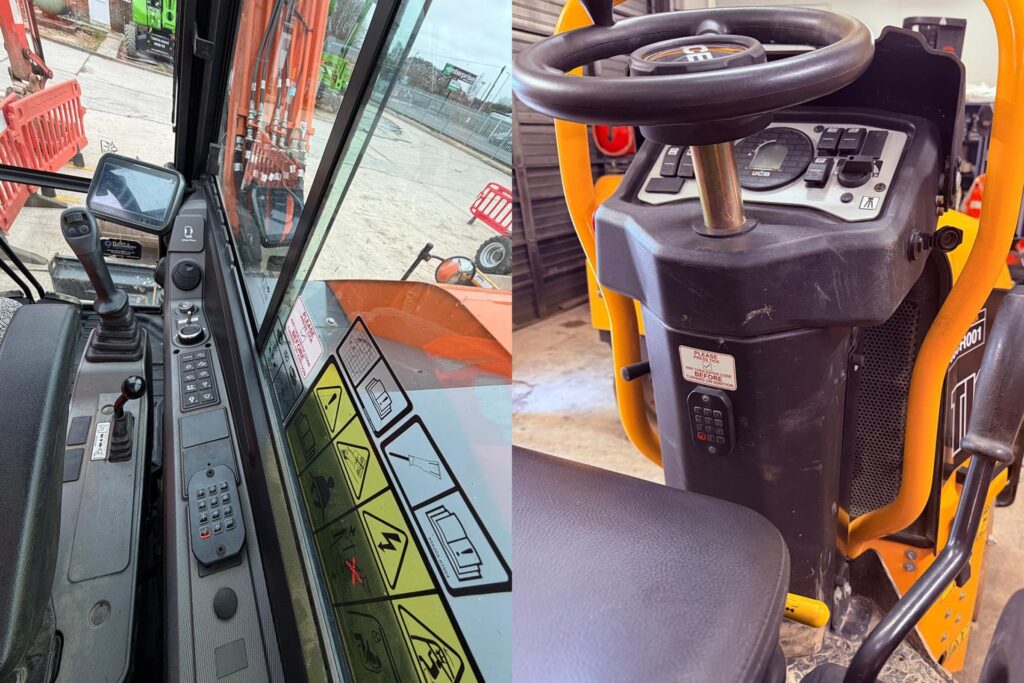
Tracking alone is valuable, but prevention becomes far more effective when combined with immobilisation technology. Keypad immobilisers ensure only authorised operators can start the machine. Without the correct code, the equipment simply won’t operate. If theft does occur, an additional safeguard comes into play: remote immobilisation. This allows the machine to be disabled safely and over-the-air if it has in fact been taken.
This layered approach creates multiple barriers for criminals:
- They cannot easily start the machine
- They cannot move it unnoticed
- And even if they attempt to steal it, the machine can be stopped remotely.
For organised theft groups, that combination dramatically increases the risk of being caught and reduces the likelihood of successfully stealing plant and equipment.
Supporting Recovery After Theft
Even with the best preventative measures, theft can still happen. When it does, speed is critical. Industry data shows that less than 10% of stolen machinery is ever recovered without tracking technology.
This is where real-time tracking systems play a vital role. By providing precise location data, operators and authorities can:
- Locate stolen equipment quickly
- Work with police to recover it
- Reduce financial losses and downtime
In many cases, the difference between recovery and permanent loss comes down to how quickly the theft is detected and acted upon.
Plant security is most effective when multiple technologies work together. Rather than relying on a single deterrent, your security measured need to provide an all-in-one solution, combining:
- Geofence alerts
- Real-time tracking
- Keypad code activation
- Remote machine immobilisation
- Theft recovery support
By integrating these capabilities into a single platform, operators gain full visibility and control over their equipment fleet. The result is a system designed not only to track plant, but to actively protect it.
Plant theft is a challenge the entire industry faces. Whether it’s small contractors with single assets large hire fleets delivering nationwide. Law enforcement initiatives, industry collaboration, and new technologies are already making a difference. But the most effective defence remains proactive protection at the machine level. As the industry continues to tackle organised criminal activity, solutions that prevent theft, deter criminals, and enable rapid recovery will become increasingly essential.